
Want more wrestling news, rumors, and results? Be sure to visit PWInsider.com and PWInsiderXtra.com.

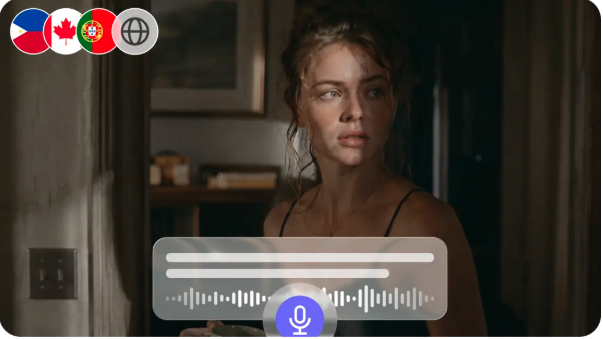
Audio has always played an important role in storytelling, but creating high-quality sound traditionally requires several different tools, skills, and stages of production. A creator may need one application for voice recording, another for background music, additional software for sound effects, and a separate workflow for mixing everything together. Artificial intelligence is changing that process by bringing several parts of audio production into a more connected workflow.
One of the technologies attracting attention in this area is Seedaudio 1.5. Creators can use Dreamina to explore Seedaudio 1.5 and experiment with dialogue, music, ambience, sound effects, and other audio elements from a single creative workflow. Rather than treating every sound as an isolated asset, the system is designed around the idea of creating a complete audio environment that fits a particular scene or piece of content.
Seedaudio 1.5 is an AI audio generation model built for creators who need more than a simple text-to-speech output. Its workflow can work with text prompts, reference audio, and video, allowing creators to generate different types of sound depending on the project.
For example, a filmmaker could describe a scene containing several characters, background activity, music, and environmental sounds. Instead of manually producing every component independently, an AI-powered workflow can help create a more connected soundscape.
The model supports text-to-audio, audio-to-audio, video-to-audio, and combined text-and-video-or-audio workflows. This makes it relevant to a broad range of creative projects, from short films and advertisements to podcasts, game development, and video localization.
Traditional audio production can be time-consuming because every element has to be recorded, sourced, edited, synchronized, and mixed. Even a short video can require dialogue, background atmosphere, footsteps, transitions, music, and other effects.
AI audio generation introduces another approach. Instead of beginning with a blank timeline, creators can begin with an idea.
A prompt might describe a quiet forest at sunrise, a crowded city street, a dramatic conversation inside a spaceship, or an advertisement with several speakers. The resulting audio can then become a starting point for further editing and refinement.
This can be especially useful for independent creators who may not have access to a professional sound team.
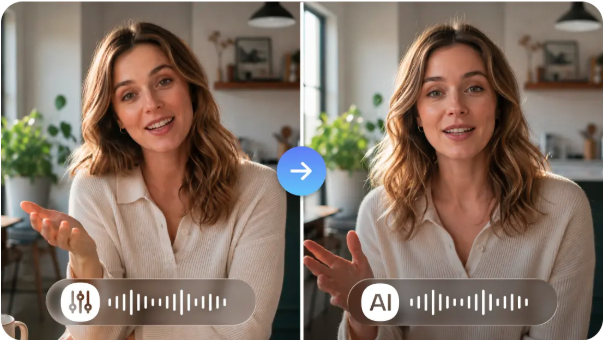
One important characteristic of Seedaudio 1.5 is its ability to combine several audio components within a single creative direction. Dialogue does not necessarily have to exist separately from music or environmental effects.
Consider a short dramatic scene. A creator may want two characters talking while rain falls outside, distant traffic passes by, and subtle music builds tension. In a traditional workflow, these elements might be produced separately and then synchronized manually.
An AI-assisted workflow can instead interpret the scene as a complete audio concept.
This approach can help creators think about sound from a storytelling perspective rather than simply collecting individual effects.
Another useful capability is the use of reference audio. Instead of describing every characteristic of a desired voice from scratch, creators can provide suitable reference material and guide the generated result toward a particular tone, accent, rhythm, emotion, or speaking style.
This can be useful when producing recurring characters or maintaining a recognizable audio identity across multiple scenes.
For example, an animated series may have several episodes featuring the same fictional character. Consistency becomes important because the audience expects the character's voice and overall sound identity to remain recognizable.
Reference-based generation can help support that type of workflow while still allowing creators to experiment with different scenes and performances.
Audio creation becomes even more interesting when video is used as a reference.
A video already contains visual information about characters, locations, movement, timing, and atmosphere. An AI system that can use video context can help generate audio that corresponds to what is happening on screen.
This can be useful for dubbing and localization. Instead of treating dialogue as an isolated voice track, creators can work toward audio that fits the visual scene, character actions, pacing, and overall environment.
For international content creators, this type of workflow can also reduce some of the friction involved in preparing content for audiences who speak different languages.
Global audiences have made multilingual content increasingly important. A video originally created for one language may eventually need versions for several different markets.
Seedaudio 1.5 supports multilingual audio generation, with the official product information describing support for 30 languages. This creates opportunities for creators who want to experiment with international storytelling, educational content, marketing campaigns, and digital entertainment.
Instead of treating localization as an entirely separate production process, creators can incorporate language adaptation into their broader audio workflow.
The result still needs human review, particularly for pronunciation, cultural context, timing, and intended meaning, but AI can provide a faster starting point.
AI audio generation is not limited to one type of creator.
For filmmakers, it can help develop atmosphere, character dialogue, effects, and music concepts.
For podcasters, it can assist with narration, transitions, ambience, and creative sound design.
For advertisers, it can help build audio concepts around a product, campaign, or visual advertisement.
Game developers can also explore generated character dialogue, environmental ambience, and sound effects for different locations or gameplay situations.
The ability to combine multiple audio elements makes the technology particularly interesting for projects where sound contributes heavily to immersion.
Creative control becomes increasingly important as projects become more complicated. Seedaudio 1.5 includes support for separate audio tracks and timestamp-based control, allowing creators to work with dialogue, music, ambience, and sound effects as distinct elements.
This can make the editing process more manageable because individual components can be reviewed and adjusted instead of treating the entire output as one inseparable recording.
For a scene containing multiple speakers and changing background conditions, precise timing can also help align audio with visual events.
A simple workflow can begin with a clear description of the scene. The creator can identify the characters, location, mood, actions, language, and desired audio elements.
Next, the creator can generate an initial version and listen for issues such as pacing, pronunciation, emotional delivery, or missing environmental details.
After that, individual elements can be refined. A creator may adjust the dialogue, replace an effect, change the atmosphere, or alter the timing of a particular event.
This makes AI more useful as part of a creative process rather than treating it as a complete replacement for human judgment.
AI audio technology is moving toward more complete creative workflows. Instead of generating only isolated voices or short sound effects, newer systems are designed to understand relationships between dialogue, music, ambience, movement, and storytelling.
That shift could make professional-style audio production more accessible to independent creators, small businesses, educators, filmmakers, and online publishers.
Seedaudio 1.5 represents this broader direction by bringing several audio-generation capabilities into one workflow. Its support for text, audio references, video references, multilingual generation, separate tracks, and detailed timing gives creators more options for building complex sound environments.
As the technology develops, the most effective results will likely come from combining AI generation with human creative direction, editing, and quality control. AI can accelerate the production process, but storytelling still depends on decisions about emotion, pacing, meaning, and audience experience.
For creators looking to experiment with modern audio production, this approach provides an interesting way to move from a written idea or visual scene toward a richer and more complete sound experience.
If you enjoy PWInsider.com you can check out the AD-FREE PWInsider Elite section, which features exclusive audio updates, news, our critically acclaimed podcasts, interviews and more by clicking here!