Want more wrestling news, rumors, and results? Be sure to visit PWInsider.com and PWInsiderXtra.com.


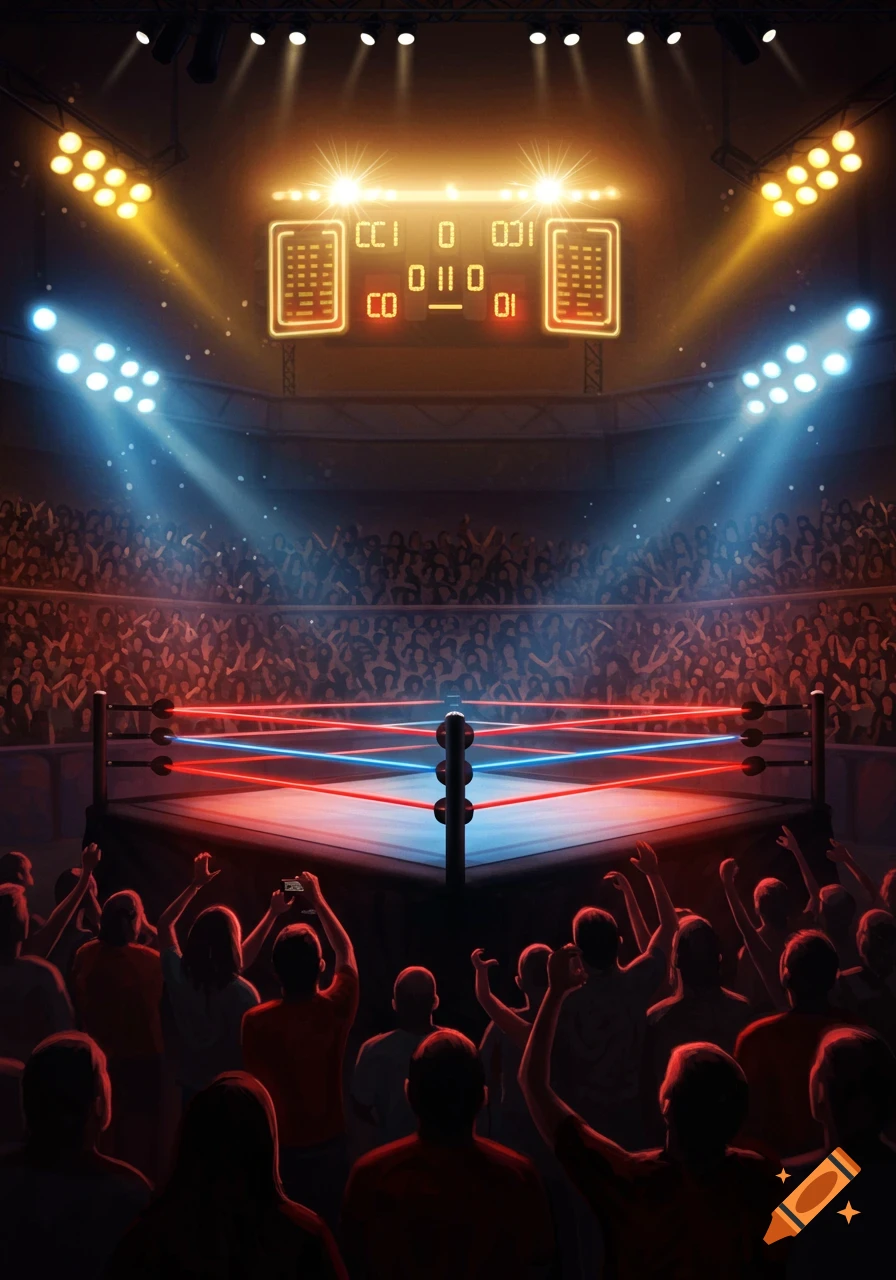
There is a very specific kind of energy that fills a stadium just before the referee's hand hits the mat for the third time. Whether you're sat in the nosebleeds at Wembley or watching from your sofa in the early hours of a Monday morning, that collective intake of breath is universal. It is the moment where months of storytelling, physical risk, and emotional investment culminate in a single outcome. In the world of professional wrestling, we call this the "payoff," but the psychological mechanics behind it aren't actually that different from the feeling of a high-stakes win in any other arena.
We've entered what many are calling a "Renaissance Era" for sports entertainment. The industry has moved far beyond the smoky halls of the past, transforming into a global juggernaut where the numbers are as staggering as the athleticism. But why do we care so much? Why does a predetermined 1-2-3 count trigger the same biological response as a last-minute goal or a major win on a gaming floor? To understand that, we have to look at the intersection of big business, brain chemistry, and the calculated risks that define the modern entertainment landscape.
If you haven't checked the business headlines lately, you might have missed the fact that wrestling is currently experiencing its biggest financial boom in history. The formation of TKO Group Holdings, which saw the merger of WWE and UFC, signalled a massive shift in how "the spectacle" is valued by the market. We're no longer just talking about ticket sales and t-shirts; we're talking about massive media rights deals that rival major sports leagues.
Earlier this year, the announcement of a ten-year, $5 billion deal to bring WWE Raw to Netflix was a watershed moment. It proved that the "Big Win" isn't just for the performers in the ring, it’s for the shareholders too. WrestleMania 40 recently shattered records with a gate of over $38 million, proving that people are more willing than ever to pay premium prices for that live "payday" experience.
I find it fascinating how the organisation has centralised its revenue streams. They’ve moved away from the old pay-per-view model, where fans paid a one-off fee for a single show, and transitioned into a subscription-based ecosystem. This provides a steady baseline of income, allowing the "Big Win" moments at events like SummerSlam or the Royal Rumble to serve as the peak of the mountain rather than the only source of oxygen. This mirrors how many successful entertainment companies operate today; they build a solid foundation of engagement so that when the big moment happens, the impact is multiplied across every channel.
Have you ever wondered why your heart races during a title match even when you suspect you know who’s going to win? That's your neurochemistry at work. When a wrestler finally captures the gold after a long struggle, the crowd erupts in what’s known in the industry as a "pop." From a biological perspective, this is a massive release of dopamine.
Dopamine isn't just about the reward itself; it’s actually more about the anticipation of the reward. When a challenger is trapped in a submission hold and looks like they might tap out, your brain is working overtime. The tension builds, and the eventual release—whether they escape or finally win the belt—provides a surge of satisfaction. It’s the same mechanism that keeps people engaged in any high-stakes scenario. The "near-miss" is just as psychologically powerful as the win itself because it reinforces the idea that the "Big Win" is just around the corner.
In my experience, the most memorable wrestling matches are the ones that play with this tension most effectively. Think about the legendary "Iron Man" matches where the clock is ticking down. The stakes feel higher with every passing second. This type of structured tension is a masterclass in psychological pacing. We see this across all forms of entertainment where the outcome isn't guaranteed. The uncertainty creates a vacuum that our emotions rush to fill. Whether it’s the spin of a wheel or the flight of a ball, the human brain is wired to crave that moment of resolution.
While wrestling is scripted, the path to the finish is often far more chaotic than people realise. Injuries, crowd reactions, and behind-the-scenes changes can alter a match outcome at the very last second. In a way, wrestling has its own version of a Random Number Generator (RNG). A promoter might plan for a specific "Big Win," but the "RNG of the Ring"—the variables of live performance—can throw a spanner in the works.
This element of unpredictability is exactly why betting markets for pro wrestling have become so popular. It might seem strange to bet on a scripted event, but oddsmakers look at "smart money" and narrative trends to set their lines. It’s a game of probability. Will the long-term champion finally drop the belt to the rising star? The probability shifts as the story unfolds.
When we look at gaming systems, RNG is the engine that ensures fairness and unpredictability. In a wrestling match, the "script" serves as the framework, but the execution is the variable. The reason we stay glued to the screen is that there's always that 1% chance that something unexpected happens—a "screwjob" or a surprise return. That slim margin of unpredictability is what keeps the stakes feeling real. We are all essentially calculating probabilities in our heads; we're weighing the likelihood of the underdog winning against the dominance of the veteran.
If there's one thing a wrestling promoter knows, it’s that you can’t have a WrestleMania-level event every single week. If you did, the "Big Win" would lose its meaning. This is a lesson in sustainability that applies to anyone who enjoys high-stakes entertainment. Promoters have to manage their talent, their budgets, and their storylines with incredible discipline. If they "blow their load" too early on a massive spectacle, they’ll have nothing left for the rest of the season.
Many of us can learn a lot from this "Promoter Logic." It’s about managing your resources so that you can stay in the game for the long haul. In the world of gaming, this is often called bankroll management. It’s the practice of setting aside a specific amount of money for your entertainment and sticking to it, ensuring that you’re never putting more on the line than you can afford to lose.
Just as a promoter wouldn't bet the entire company's future on a single match, a savvy player knows to spread their activity. For instance, if you're exploring the world of jackpot slots, the goal isn't just to hit the big one on your first go, but to understand the mechanics and play with a strategy that respects your budget. The most successful players are the ones who treat it like a marathon, not a sprint. They recognise that the enjoyment comes from the process and the participation, not just the final result.
Managing your bankroll like a promoter means being honest with yourself about your limits. It means knowing when to walk away and when to save your "main event" energy for another day. This level of discipline ensures that the "Big Win" remains a source of genuine excitement rather than a source of stress.
The world of professional wrestling and the world of high-stakes gaming are closer than they might appear. Both are built on the foundation of anticipation, probability, and the psychological weight of the "Big Win." Whether it's the roar of 80,000 people in a stadium or the quiet satisfaction of a well-played session at home, the underlying mechanics remain the same.
We crave the spectacle because it offers a break from the everyday. It allows us to participate in a story where the stakes feel enormous and the rewards feel life-changing. But the key to enjoying any of it—whether you're a promoter, a wrestler, or a fan—is balance. By understanding the neurochemistry at play and maintaining a disciplined approach to how we engage, we can ensure that the "payday" always feels like a win, regardless of the outcome on the mat.
***
Please gamble responsibly. For more information and support, visit BeGambleAware.org or call the National Gambling Helpline on 0808 8020 133. Always set limits and stay within your budget.
If you enjoy PWInsider.com you can check out the AD-FREE PWInsider Elite section, which features exclusive audio updates, news, our critically acclaimed podcasts, interviews and more by clicking here!