Want more wrestling news, rumors, and results? Be sure to visit PWInsider.com and PWInsiderXtra.com.


Younger Nepalis still gather for festivals, local football, tea-shop talk, and evening walks, but the shape of leisure has changed. By late 2025, Nepal had 32.4 million mobile connections, 16.6 million internet users, and 14.8 million social media users, while Facebook remained the largest platform by reach. The 2024-25 Nepal Multiple Indicator Cluster Survey, published in February 2026, found that 85.1 percent of households had smartphones and 82.0 percent had internet access at home. Those figures explain why a free hour in Kathmandu, Pokhara, or Butwal now often shifts between a reel, a futsal booking, a cricket stream, and a group chat rather than a single fixed pastime. The shift is not abstract; it shows up in the small choices that fill a week, from watching a Nepal match at Dasharath Rangasala to replaying the same goal on a phone before the walk home has ended.
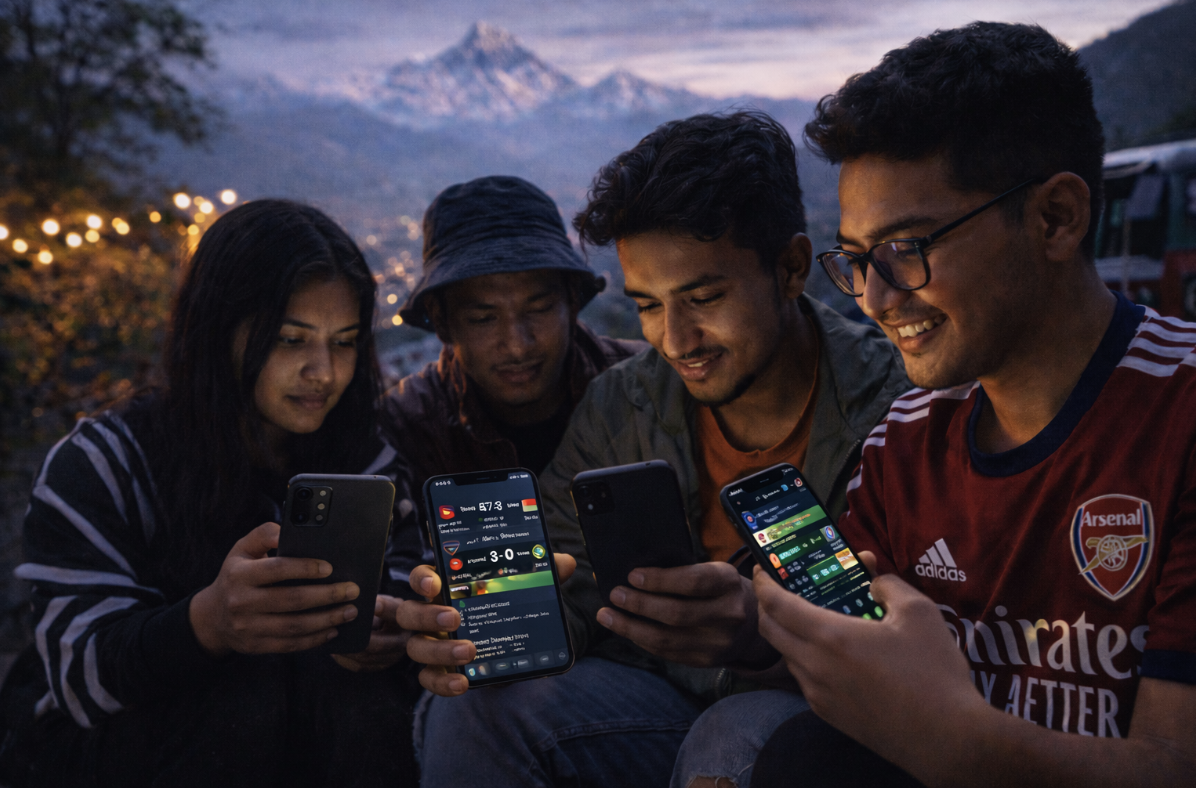
Traditional leisure in Nepal has not disappeared; it has been rerouted. A student who once spent an entire Saturday at a neighborhood ground or a family gathering now often splits that time between outdoor plans and a phone-led second layer of entertainment, and the pace of that change can be seen in official figures showing that 75.1 percent of people aged 15 to 49 had used the internet in the previous three months and 76.7 percent owned a smartphone. That means the old rhythm of one event followed by a quiet gap has become something else: one event, several notifications, a burst of comments, and another short session later that night. Screens decide fast.
Sport has become one of the clearest engines of this new leisure pattern. On February 5, 2026, the ICC confirmed that the Men’s T20 World Cup would be shown in Nepal on Kantipur TV, with selected matches produced locally in Nepali commentary, and that decision mattered because it turned a tournament into a stream of clips, replies, and parallel conversations on the same device. Football has produced the same effect: the Nepal Super League, which describes itself as the country’s first and only professional franchise-based football league since its 2020 launch, keeps supporters active between matchdays with previews, short videos, and reactions rather than asking them to wait for a Sunday recap. Leisure no longer pauses when live play ends; it simply changes format.
The speed of circulation is easiest to see in youth football. ANFA’s official reports from the SAFF U-20 Championship in March 2026 gave supporters a string of moments made for short-form spread: Sujan Dangol scored from an indirect free kick in the fifth minute against Bhutan on March 23, Thinley Yezer saw a second yellow in the 14th minute, Subash Bam scored against Sri Lanka in the 24th minute on March 25, and Nishan Raj Lawat equalized against Maldives in the 87th minute on March 27. Those details do not stay inside match reports for long because they quickly move into comment threads, edits, and fan-made posts, and the same mobile habit that drives that traffic also leaves room for an online casino session later in the evening without feeling like a separate activity. One short highlight leads to another screen, another reply, another small wager of attention, and younger users have become fluent in that sequence.
That fluency has changed how hobbies spread. DataReportal’s 2026 Nepal profile says 89.3 percent of internet users in Nepal used at least one social platform in late 2025, so trends now move through a dense chain of reposts, screenshots, private groups, and short public reactions rather than slow word of mouth alone. A dance challenge, a futsal trick, a batting clip, or a café recommendation can gather momentum in a day because each user acts as a small distributor, not just a viewer, and the final form of leisure is often decided by whatever is circulating hardest that week. Nothing stays local for long.
Esports and platform gaming show how quickly younger behavior adapts when a new structure is easy to join. The Nepal Esports Association says the 5th Nepal Esports Championship & Expo 2025 used a hybrid format, with qualifiers and double-elimination matches online until the semi-finals before LAN finals, and its official page promotes a community of more than 50,000 around titles such as CS2, Dota 2, PUBG Mobile, Mobile Legends Bang Bang, and eFootball. That model aligns with the broader logic of youth leisure in Nepal because entry is low, communication is constant, and status often comes from posting clips, joining Discord conversations, or reacting in real time rather than waiting for a formal event. In the same pattern, mel bet fits into the penultimate hour of the night not as a separate spectacle but as another app competing for the same fast, mobile attention that also drives streams, gaming rooms, and message threads.
The larger change is not that younger Nepalis have abandoned older pleasures. It is that entertainment, social activity, and digital interaction now overlap so tightly that leisure often arrives as a sequence of returns to the same screen: a football update, a family message, a music clip, a gaming lobby, a stream reopened after dinner. ANFA’s official platform now pushes news, fixtures, videos, live match coverage, and player profiles in one place, and that kind of design has trained users to expect continuity rather than separate experiences. In 2026, spare time in Nepal is still social, still public, still tied to sport and shared routine, but it is increasingly organized by platforms that keep the user moving from one small attraction to the next without asking for a full stop.
If you enjoy PWInsider.com you can check out the AD-FREE PWInsider Elite section, which features exclusive audio updates, news, our critically acclaimed podcasts, interviews and more by clicking here!