Want more wrestling news, rumors, and results? Be sure to visit PWInsider.com and PWInsiderXtra.com.


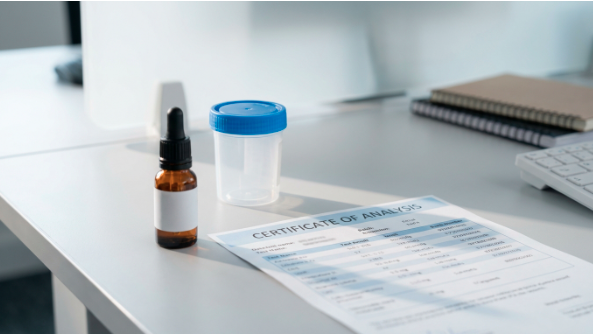
CBD itself is not what drug tests look for. Standard workplace screening panels in the UK target THC metabolites — specifically a compound called THC-COOH — not cannabidiol. So in the strictest sense, CBD cannot fail a drug test.
But that answer has a critical caveat: CBD products can contain THC. Depending on the product type, dosing frequency, and the quality of what you're buying, trace THC can accumulate and push you over a detection threshold. Understanding exactly when and why that happens is what matters.
Urine tests are by far the most common method used in UK workplaces. They don't detect THC directly — they detect its primary metabolite, THC-COOH, which the body stores in fat tissue and releases gradually.
The standard screening threshold in the UK is 50 ng/mL of THC-COOH in urine. A sample above triggers a non-negative result, which is then sent for confirmatory gas chromatography–mass spectrometry (GC-MS) testing at a lower confirmation threshold of around 15 ng/mL.
Here's how detection windows vary by test type and usage pattern:
|
Test type |
Occasional use |
Regular use |
Heavy/daily use |
|
Urine |
3–5 days |
7–15 days |
Up to 30+ days |
|
Saliva |
1–2 days |
2–3 days |
Up to 3 days |
|
Blood |
1–2 days |
2–7 days |
Up to 7 days |
|
Hair |
N/A |
Up to 90 days |
Up to 90 days |
The key point for CBD users: if trace THC from your CBD product accumulates through daily use, it behaves identically in your body to THC from any other source. The test cannot distinguish the origin.
There are three main routes to a positive test from CBD use.
Product type matters most.
Full-spectrum CBD products contain all naturally occurring hemp cannabinoids, including THC up to the UK legal limit. With repeated daily use, even small amounts can accumulate in fatty tissue. Broad-spectrum products are processed to remove THC and carry much lower risk. CBD isolate — pure cannabidiol with all other cannabinoids removed — carries the lowest risk of the three.
Mislabelling is a documented problem.
A March 2024 study published in Frontiers in Pharmacology tested 149 commercial CBD products and found 74% deviated from their stated CBD potency by more than 10%. A BBC-reported investigation by Kent Scientific Services found 72% of 61 sampled products contained one or more controlled psychoactive elements of cannabis — some products marketed as "THC-free" were no such thing.
High daily doses compound risk.
WebMD notes that a single, occasional use of a compliant CBD product is unlikely to push anyone over the 50 ng/mL threshold. Daily or high-dose use of full-spectrum products over weeks is a different matter. THC is lipophilic — it binds to fat and clears slowly, so cumulative exposure from even low-THC products can build meaningfully over time.
Legal hemp-derived CBD products in the UK sold by the reputed cbd flower shop like OriginalsCBD must contain less than 0.2% THC in the raw plant material, and the finished product must not exceed 1mg of THC per container. In July 2025, as reported by Cannabis Health News, the FSA published updated guidance establishing a safe upper level of 1 µg/kg body weight/day of THC — with the 1mg-per-container limit remaining the only hard, enforceable cap.
That compliance framing matters for context: a legal, properly tested CBD product with under 1mg THC per container is unlikely to cause a failed drug test with occasional use. The risk rises with frequency, dose, and poor-quality products that exceed their labelled THC content.
A COA is a third-party laboratory report that lists the actual cannabinoid content of a specific product batch. It's the most important document you can check before buying any CBD product if you're concerned about drug testing.
When reviewing a COA, look for:
Delta-9 THC listed separately — this is what drug tests detect, not THCa or total THC
A detection threshold/LOQ — the limit of quantification tells you how sensitive the test was; anything reported as "ND" (not detected) below a stated LOQ confirms absence to that level of precision
The testing laboratory's name and accreditation — ISO 17025 accreditation is the standard for forensic-quality lab work
Batch number matching your product — a COA that doesn't correspond to your specific batch is nearly worthless
At Originals CBD, every batch of CBD flower and CBD hash ships with a corresponding COA from an independent accredited laboratory, with delta-9 THC reported individually. This isn't a formality — it's the only reliable way to confirm a product won't carry unexpected THC exposure. You can learn more about what to look for when buying CBD flower to make sure you're checking all the right boxes.
If you use CBD regularly and have a workplace drug test coming up, these steps reduce your risk meaningfully:
Switch to CBD isolate or verified broad-spectrum products — check the COA confirms delta-9 THC at or below the LOQ
Stop using full-spectrum products at least 2–4 weeks before the test — daily users should allow more time given THC's slow clearance from fat tissue
Avoid high daily doses — even from compliant products, very high CBD flower consumption can increase cumulative THC exposure
Disclose your use proactively — inform occupational health that you use legal, lab-tested CBD products; ask for confirmatory GC-MS testing if you receive a non-negative screen result
Verify the COA is batch-specific — a generic or undated lab report is not sufficient
CBD flower carries a distinct risk profile compared to oils or gummies. Because the flower is smoked or vaporised, cannabinoids enter the bloodstream rapidly and at relatively high concentrations per session compared to a daily oil dropper. Frequent CBD flower smokers using full-spectrum or high-terpene strains should treat the risk as meaningfully higher than casual oil users.
This is exactly why batch-level lab testing and a transparent THC figure on every strain matters. Understanding how to avoid headaches and anxiety with CBD flower and managing your intake more broadly includes factoring in drug test considerations if that's relevant to your situation.
Will CBD oil show up on a drug test?
Not directly — drug tests don't screen for CBD. But full-spectrum CBD oil contains trace THC that can accumulate with daily use and potentially trigger a positive result. Broad-spectrum or isolate-based oils present much lower risk.
Can CBD flowers cause a failed drug test?
Yes, if used frequently or at high doses. Even compliant hemp flowers under 0.2% THC deliver THC with each session, which builds up in fat tissue. Occasional use from a verified, low-THC strain is unlikely to be an issue; daily use over weeks carries real risk.
How long should I stop before a drug test?
For occasional CBD flower or full-spectrum oil use, 5–7 days is generally considered sufficient. Daily users should allow at least 2–4 weeks, since THC can remain detectable in urine for 30 days or more in heavy users.
What does 'THC-free' actually mean on a label?
It should mean delta-9 THC was not detected above the lab's limit of quantification in that batch. Always verify this against the actual COA — a label claim without a supporting batch-specific lab report is unverifiable.
If you enjoy PWInsider.com you can check out the AD-FREE PWInsider Elite section, which features exclusive audio updates, news, our critically acclaimed podcasts, interviews and more by clicking here!