Want more wrestling news, rumors, and results? Be sure to visit PWInsider.com and PWInsiderXtra.com.


Brand Wars: Professional Wrestling Event Signage and the Install Crew
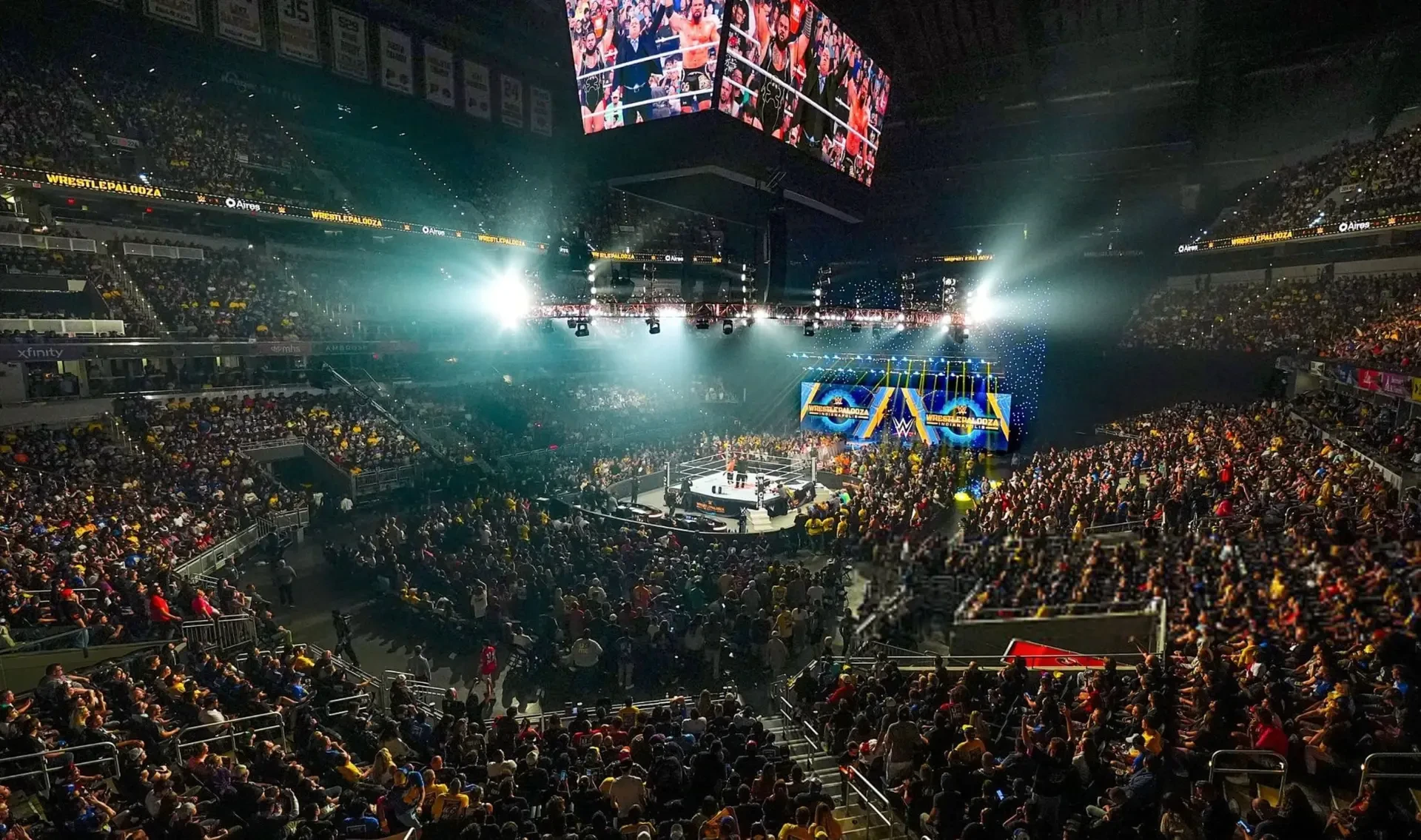
On fight night, the crowd sees a ring, a ramp, and a wall of LEDs. Outside, the decisive work is quieter: banners tensioned, vinyl aligned, sponsor marks leveled, wayfinding placed where feet actually move.
That hidden layer is professional wrestling event signage. Promotions manufacture “dominance” before any wrestler throws a punch—by controlling what fans see on the approach, what cameras see inside the bowl, and what the city sees in the days before the show.
In New York City, that control is expensive and regulated. The marketing team wants speed; the city wants permits, licensed labor, and insurance certificates. The gap between those priorities is where events lose time, lose money, or end up in violation.
Professional wrestling event signage is territorial, not decorative
Wrestling is built on rivalry and spectacle. In wrestling promotion marketing, the first win is visual: make the event look unavoidable. Promotions don’t just advertise; they “claim” the venue and the surrounding streets for a night.
The broader market reward for that kind of physical visibility is measurable. Out of Home Advertising Association of America reported U.S. out-of-home (OOH) advertising revenue surpassed $9.1B in 2024 (+4.5% YoY) and that digital OOH accounted for 34% of spend.
Wrestling promotions sit right at that intersection. Their ticket sales spike on “event weeks.” Their sponsors want proof of placement. Their broadcast needs clean, repeatable brand surfaces. That is why print and installation become a production discipline, not an afterthought.
The three visibility zones: inside, perimeter, citywide
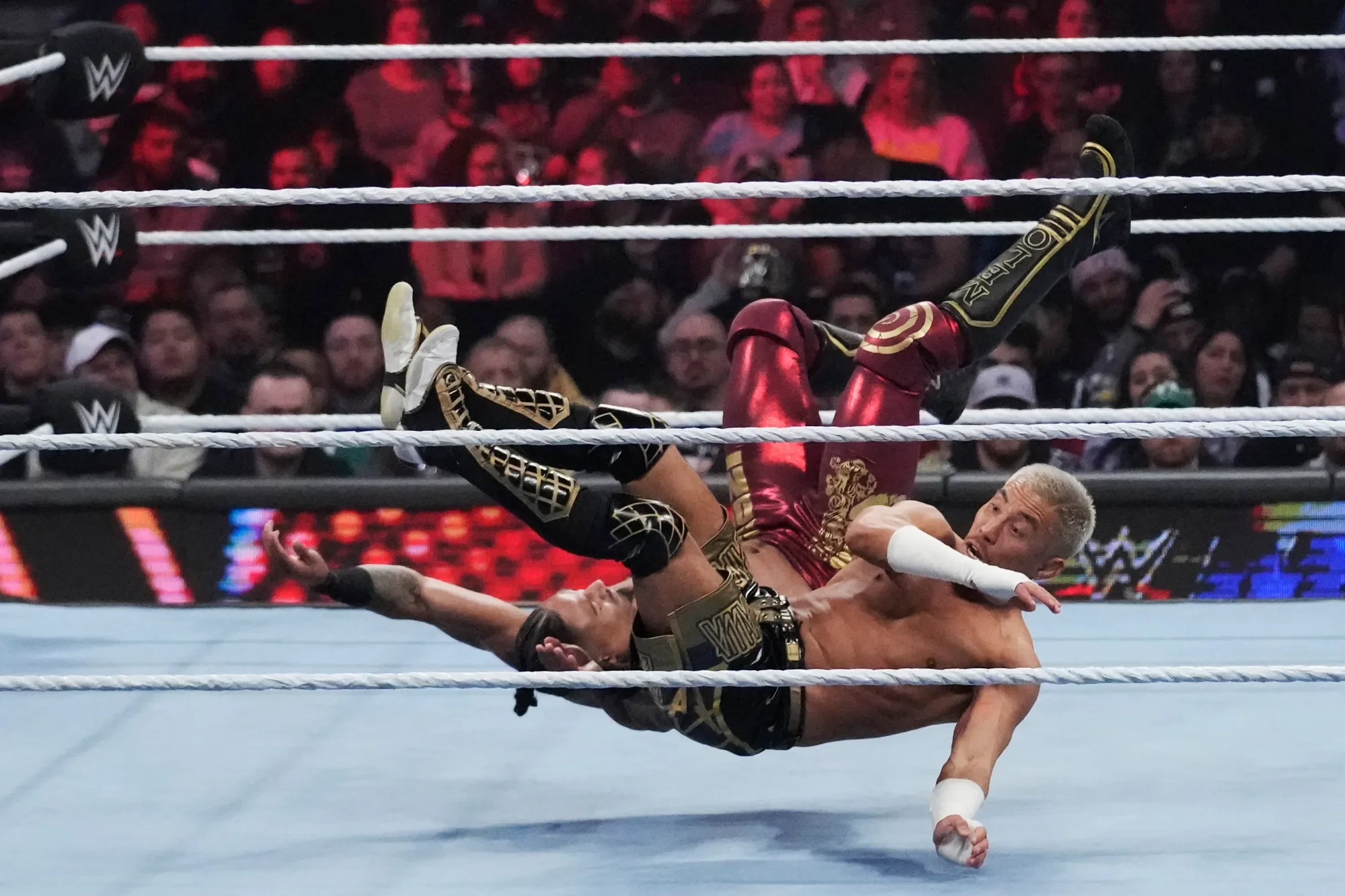
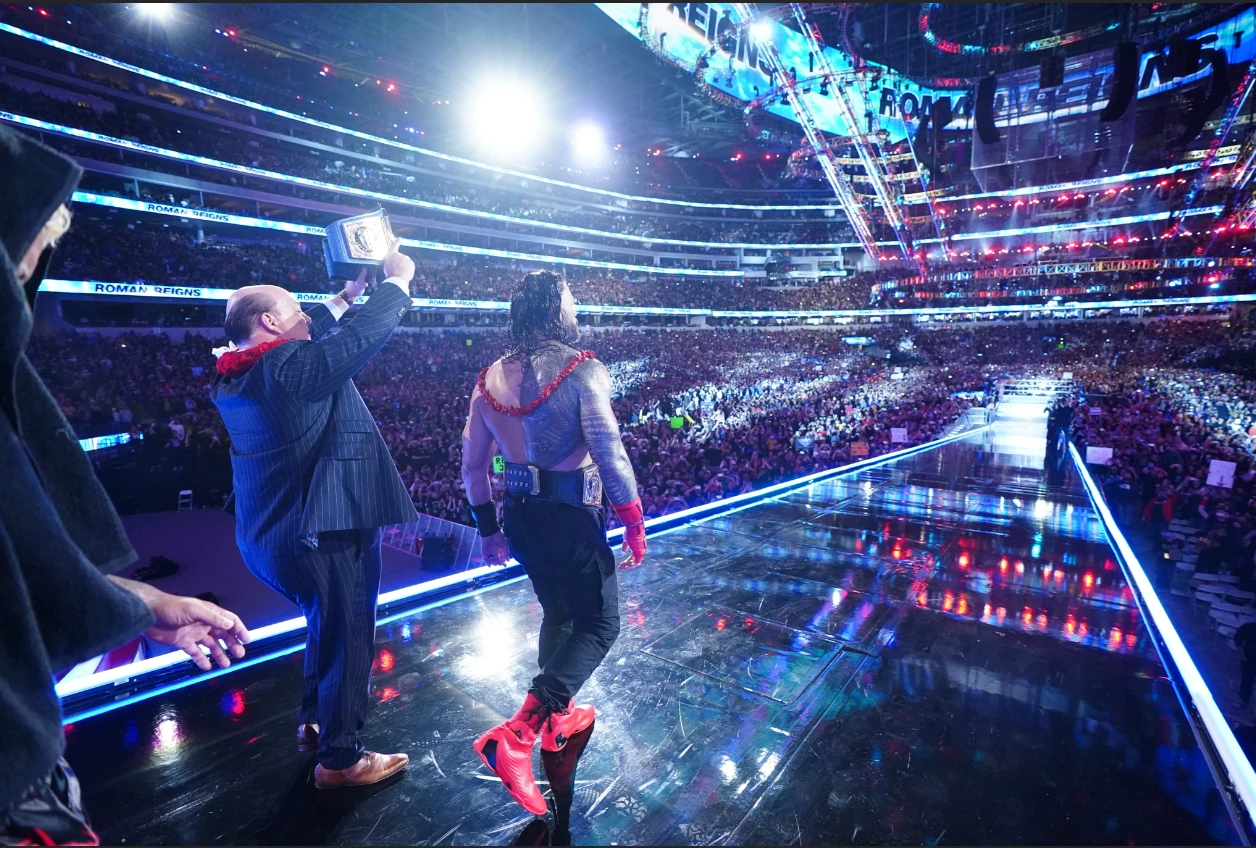
Inside the venue, arena signage printing is camera-first. The backbone is venue branding graphics—wayfinding, sponsor marks, and surfaces designed to hold up on camera and in crowd photos. Floor graphics, barricade wraps, turnbuckle pads, and step-and-repeat backdrops are chosen for the angles directors cut to all night. The LED entrance stage signage is designed to dominate the first 10 seconds of every entrance and every replay package.
At the perimeter—gates, queue lines, fence runs—the goal is conversion and crowd flow. Outdoor promotional signage confirms “this is the place,” pushes last-minute upsells, and turns the approach corridor into a photo backdrop. This is where event banner installation becomes a logistics problem: wind, brackets, access equipment, and removal timing.
Citywide is where promotions try to make the event feel inevitable: posters in partner windows, transit placements, street furniture, and—when they can do it through official channels—street banners that mark a neighborhood as “host territory.” For a bigger visual “stamp,” some events also deploy large format print for live events like temporary façade graphics or building wrap installation around venue-adjacent structures (where contracted and permitted), because scale reads as authority.
New York’s rulebook: where the project can break
Promotions love improvisation. New York does not. In NYC, the same graphic can be treated as “temporary decor” or as regulated signage depending on how it is built, mounted, illuminated, and sized.
DOB permits and licensed labor
The NYC Department of Buildings states that sign displays and installations generally require Department permits under the Construction Code, filed through DOB NOW: Build. The agency also lists key exceptions: painted signs or signs smaller than six square feet that are not illuminated, plus other code exceptions.
Electrical adds a second track. DOB notes that any proposed sign requiring an electrical connection needs a separate work permit filed by a licensed electrician. And for certain illuminated signs extending beyond the building line, an annual illuminated sign permit may be required and renewed annually.
Most important for schedule planning: for sports event sign installation in NYC, these triggers decide whether your timeline is measured in hours or in filings. DOB requires a licensed sign hanger to perform or directly supervise many sign installations, with specific exemptions spelled out in code.
DOT street banners: a public-interest program, not an ad buy
If a promotion wants to mark territory on lampposts, the NYC Department of Transportation runs the street-banner program—and it comes with hard constraints.
DOT allows approved vertical banners on street lampposts citywide to promote public events, cultural exhibits, and civic or neighborhood initiatives; commercial advertising is not permitted. DOT also states there is no permit fee, but the permittee pays all fabrication, installation, inspection, maintenance, and removal costs.
The specs are unusually explicit for marketers: max 3 feet x 8 feet, six air slits, sponsor logo capped at 10% of banner area; and installation/removal must be by a licensed rigger, with a certificate of insurance submitted as part of the application. DOT also notes that the number and locations must be approved, and that banners may not obstruct traffic control devices or interfere with other authorized attachments.
This is compliance-heavy high-impact print marketing. It can look like a simple “city takeover.” Operationally, it’s a regulated rigging project framed as a civic message.
Enforcement: why “we’ll deal with it later” is a bad plan
NYC’s sign enforcement is not a theoretical threat. DOB explicitly warns that illegal signs can receive multiple violations returnable to the Office of Administrative Trials and Hearings. DOB also publishes penalty ranges.
For Class 1 sign violations, DOB states first-time penalties are $10,000 each and subsequent violations are $25,000 each. For Class 2 violations, first-time penalties typically range from $800 to $1,250, with higher amounts for repeat offenses. DOB also notes that correction may need to be performed by a licensed sign hanger.
There is a second lesson in DOB’s signage guidance: rule enforcement can include time-boxed programs that change what gets penalized and when. DOB’s Local Law 28 of 2019 page describes periods where DOB did not impose certain civil penalties for work-without-a-perit violations for defined storefront sign thresholds, and it describes a moratorium window for issuing violations on certain existing signs—while still requiring hearings for violations already issued. Treating compliance as “unchanging” is a cost trap. If you cannot document eligibility, you should budget for full compliance rather than gamble on a past waiver.
Documentation and lead time: what kills last-minute ideas
Most promotions underestimate the paperwork stack. For DOB-regulated installs, filings run through DOB NOW and may require licensed sign-hanger supervision; add electrical and you’re coordinating a licensed electrician and a separate work permit.
For DOT street banners, the application requires locations, artwork, and a rigger’s certificate of insurance, and DOT must approve the number and placement.
Operationally, that means “simple” citywide visibility can take longer than printing. The critical path is approvals and availability of licensed crews, not ink on vinyl.
Safety: the part the audience never sees
A wrestling match is choreographed. A sign installation is not. Crews work at height, often above sidewalks or crowds, under short load-in windows.
The Occupational Safety and Health Administration construction fall protection rules (29 CFR 1926.501) set baseline duties for fall protection in common scenarios such as unprotected sides and edges at height.
DOT’s banner program bakes that risk into the permitting process by requiring a licensed rigger and insurance documentation.
In the field, most failures are scope failures: unclear substrate responsibility, missing access plans, or a rushed teardown where fatigue wins. For venues and sponsors, that translates into contract friction—additional insured requirements, indemnity clauses, and strict load-in/load-out enforcement.
Electrical signage: why illumination changes everything
Illuminated elements—powered sponsor walls, exterior cabinets, temporary marquee lighting—move the work into a regulated electrical lane.
DOB is blunt: if the sign needs an electrical connection, a separate work permit is required, filed by a licensed electrician.
At the product and safety layer, electric signs and outline lighting systems are commonly evaluated under Underwriters Laboratories UL 48, while the National Electrical Code addresses signs and outline lighting in Article 600.
For wrestling promotions, the operational consequence is predictable: if illumination is a late add, it becomes a late permit, a late electrician, a late inspection—and sometimes a forced redesign.
What the best promotions do differently
The consistent mistake in live events is treating graphics as “print jobs.” The best teams treat them as coordinated scopes across creative, operations, and risk.
This is where national operators like Signs7 fit: promotions and venues rarely need “a printer” or “an installer.” They need a vendor that can coordinate print production, shipping, and on-site installation across markets while keeping insurance, safety, and permitting organized.
A concrete New York example: Times Square as an extension of the arena
Promotions have long treated Manhattan as a stage.
In 2012, WWE promoted a major event with high-profile placements in Times Square, including multiple billboards and a branded bus—explicitly using the district’s visual density as proof that the event mattered.
The tactic survives because the psychology survives: the more “official” the city looks, the more legitimate the event feels. Print, installs, and street-level placements become physical receipts.
Conclusion
In New York, commercial sign installation for events is where creative ambition meets regulated reality. The brands that look dominant on fight night are usually the ones that treated signage like infrastructure: DOT constraints for street banners, DOB permits and licensed sign hangers for installed signs, OSHA-level safety planning, and a separate electrical scope the moment illumination enters the brief.
That is the unseen main event—and the reason professional wrestling event signage is a useful blueprint for any live-event marketer in New York.
If you enjoy PWInsider.com you can check out the AD-FREE PWInsider Elite section, which features exclusive audio updates, news, our critically acclaimed podcasts, interviews and more by clicking here!